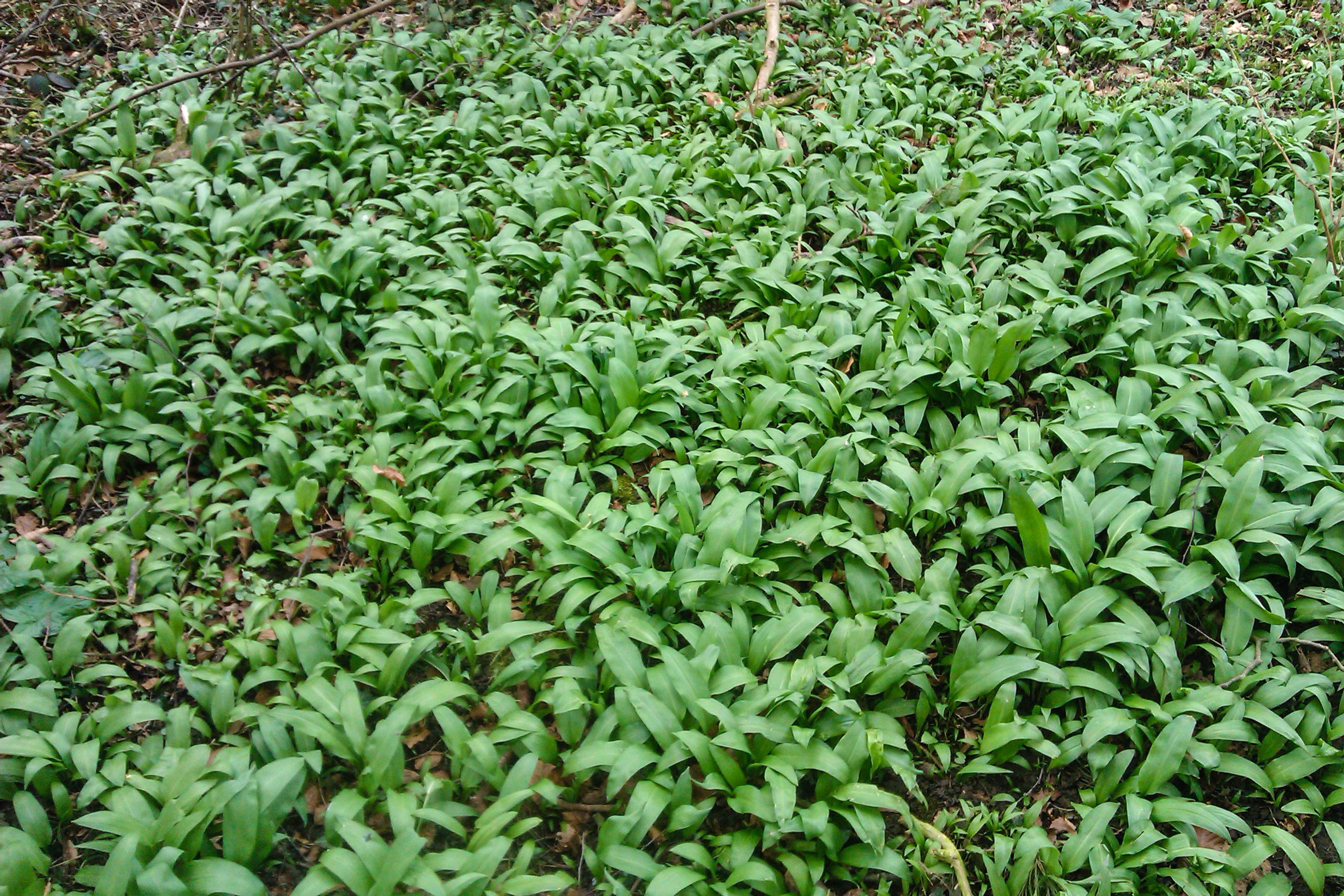
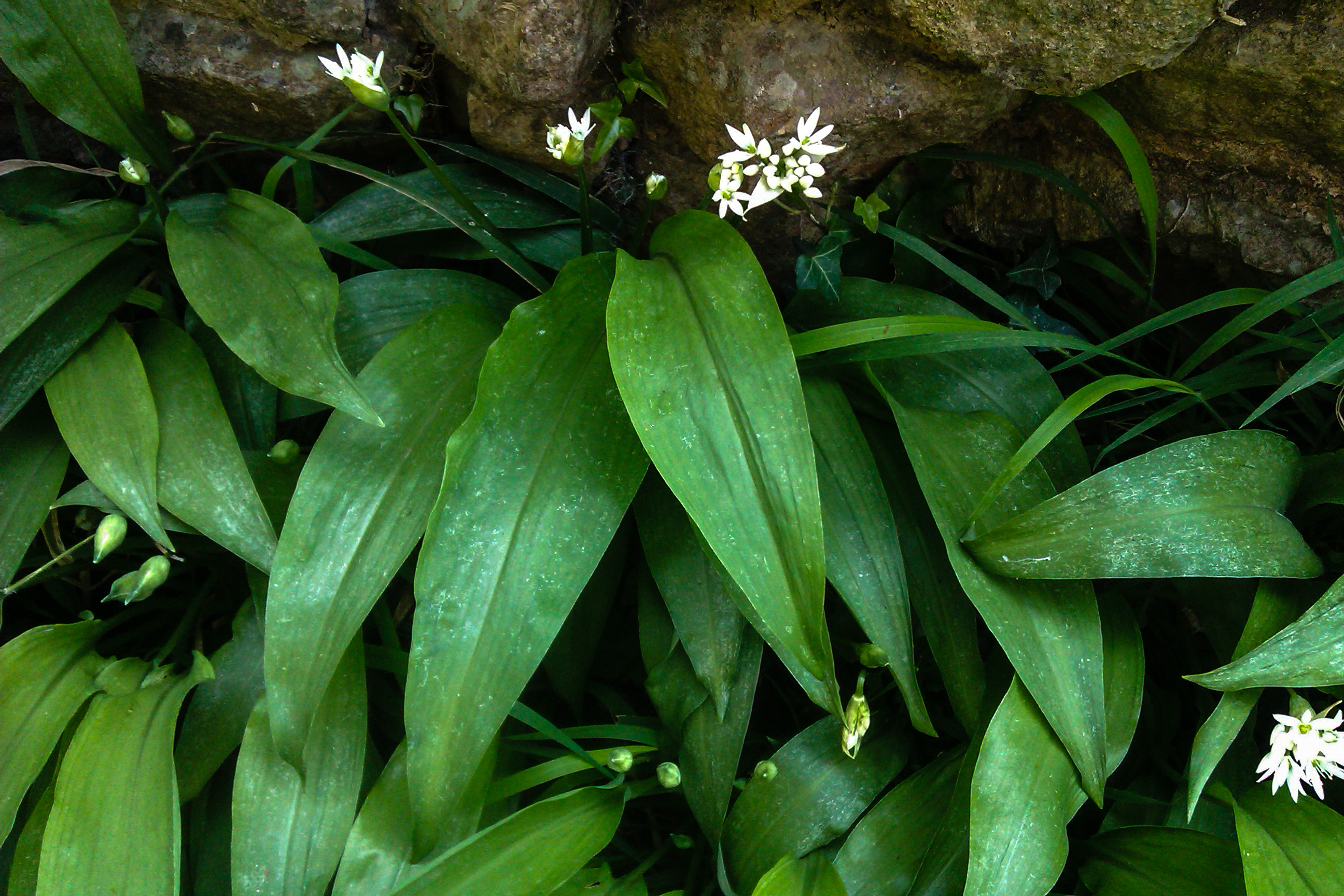
Many people are familiar with ramsons (Allium ursinum) or wild garlic, which is commonly found growing near watercourses, or the edge of damp woodland. These are a fantastic foraging find for any level of experience, being easy to identify, abundant and with a delicious garlic flavour. The leaves appear in early February and persist until early June, but start to wither after the white star-shaped flowers appear. The leaves can reach up to 25cm long, with a roughly elliptical shape ending in a point at the tip and tapering at the base down to a long stalk.

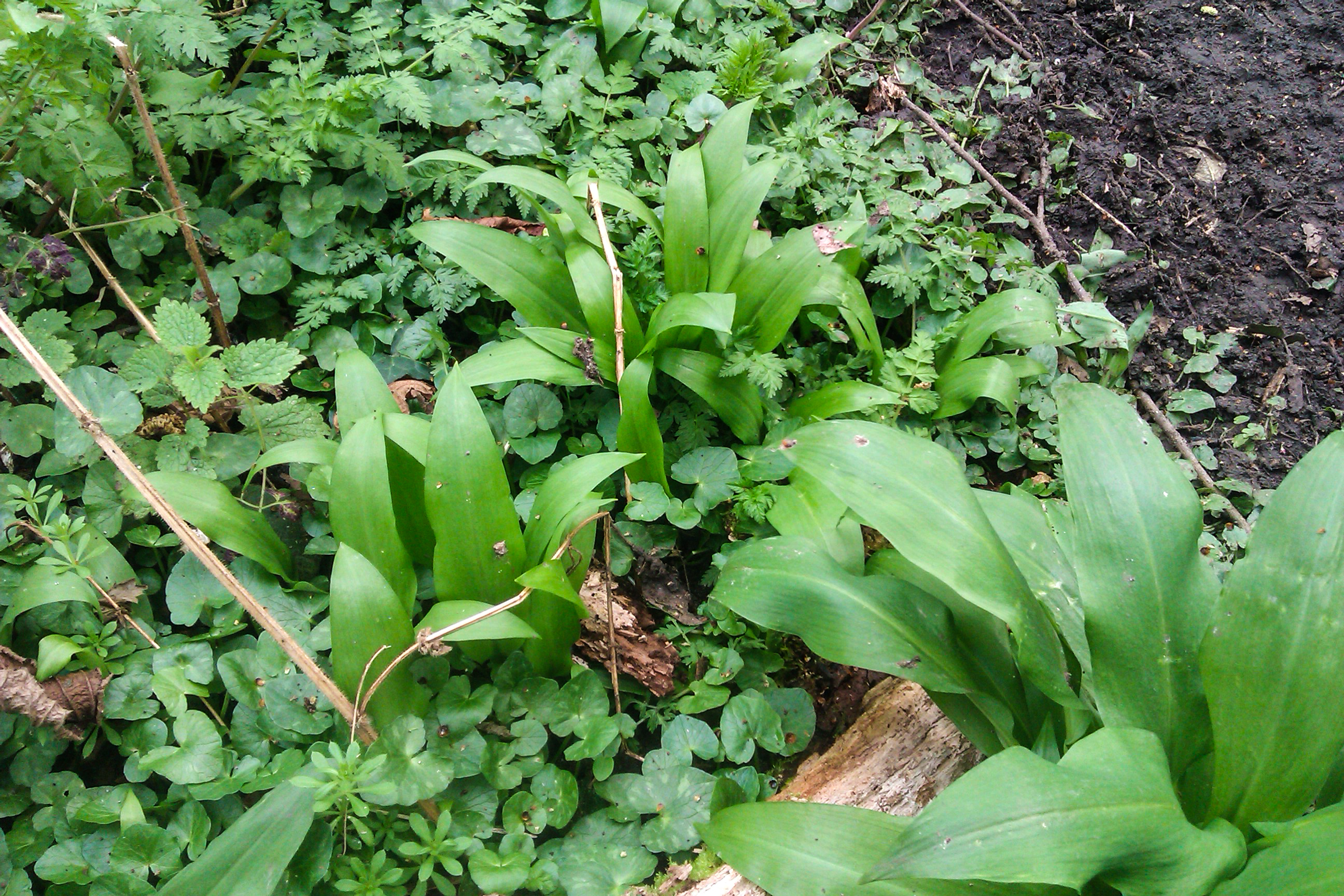
However, the main identification feature of this plant is the smell – unmistakably garlicky, especially where they carpet a riverbank or woodland floor.
It is this feature that is vital to ensure that you aren’t picking a ramson lookalike, such as Lily of the Valley (Convallaria majalis), which has been gathered in error before and used to make wild garlic soup, resulting in flushing of the skin, headaches and hallucinations. It could have been worse, the whole plant contains toxins that affect the heart and could cause death from heart failure. Leaves of autumn crocus/meadow saffron, (Colchicum autumnale) have also been served up in what was thought to be a wild garlic omelette causing nausea, vomiting and diarrhoea for 3 days for one person and, tragically, death for the other…
I relate this not to scare, but to reiterate that you should be armed with the right information before foraging – mistakes of identification like those above are very rare, but once you know the potential lookalikes and consequences you tend to forage with more care, but also more confidence. In this case the solution is very simple: none of the lookalikes produce the characteristic garlic smell when their leaves are crushed. So if you’ve identified a patch of wild garlic, picked a leaf and crushed it and it smells of garlic, you’ll be fine! Also, when flowering, wild garlic has white star shaped flowers, while lily of the valley produces clusters of fragrant, bell-shaped flowers. Autumn crocus doesn’t flower until the autumn, when ramson leaves have long since vanished. Regardless, be sure to pick leaves carefully, snipping them off with scissors for the greatest ease.
Wild garlic leaves can be kept in a ziplock bag or airtight container in a fridge for several days; otherwise they should be used soon after picking as they tend to wilt. The combination of large salad leaf and garlic flavour allows for some interesting culinary uses, such as wild garlic pesto, aioli and wild garlic dolmades, or simply chopped and added to omelettes or soups. The flowers and seed heads are also edible and taste of garlic, as does the underground bulb, which is present year round even when the leaves have gone. The garlic flavour diminishes quickly with cooking so use raw or briefly heated in recipes, otherwise when cooked for longer the remaining flavour is more onion-like.